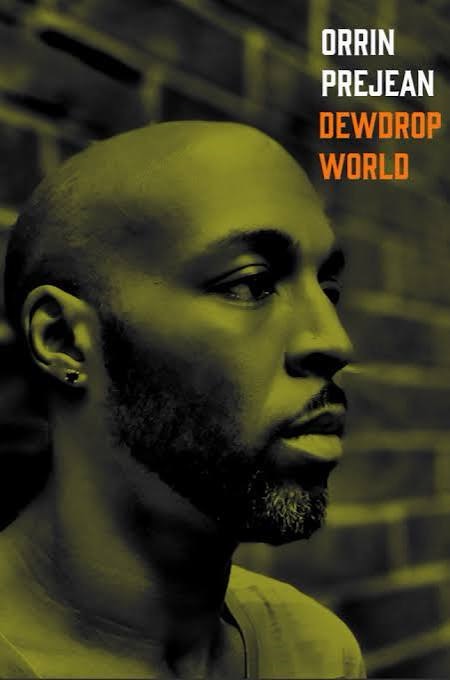
Crossposted from These Haiku…
Orrin Prejean’s 2021 collection of senryu arrives with a fitting description from Vidya Premkumar: “…a bold, contemporary senryu collection that holds vulnerability and irreverence in the same breath.” It is difficult to think of a more accurate summary. These poems feel intensely personal without collapsing into confession for its own sake. Prejean makes the form unmistakably his own.
While reading the collection, I was reminded of Fay Aoyagi’s comment in Chrysanthemum Love: “I love the shortness and evocativeness of haiku. I don’t write to report the weather. I write to tell my stories.” That same impulse runs through Prejean’s work. These senryu are not observational sketches standing at aesthetic distance from the poet. They are emotional, psychological, intimate. The reader does not simply observe the poems; they enter them.
Prejean writes his senryu in a single line. Sometimes the cut is signalled by punctuation, sometimes only by syntax or tonal shift. The effect is disorienting in the best possible way. Reading these poems can feel like falling sideways into another person’s thoughts: slightly off-kilter, emotionally exposed, occasionally funny, occasionally devastating. The poems move with the rhythm of consciousness itself.
Take:
beer foam thick his voice full of midnight
The density of “beer foam thick” immediately creates atmosphere, but the real weight arrives with “his voice full of midnight.” Midnight becomes emotional texture rather than time. The line feels intoxicated not simply by alcohol, but by memory, loneliness, desire, or perhaps danger. Like many of Prejean’s poems, it resists pinning itself to a single interpretation while remaining emotionally precise.
Or:
after a lingering kiss nothing…a long line of sugar ants
Here the ellipsis becomes the cut itself, opening a gulf between intimacy and anticlimax. The movement from a lingering kiss to sugar ants is almost absurd, yet painfully human. The poem pivots from romance to domestic intrusion in a way that undercuts sentimentality without destroying tenderness. That balance between irreverence and vulnerability is central to the collection’s success.
And:
gentle lapping waves unafraid to walk away from you
This poem carries a deceptive softness. The opening evokes a familiar lyrical calm before the emotional turn of “unafraid to walk away from you.” The waves become emotional instruction or perhaps emotional contrast. Nature here is not decorative backdrop but an extension of psychological reality.
I first encountered Prejean’s work through his writing on Bluesky, and revisiting this 2021 collection now, it is striking how distinctive the voice already was. In the years since, he seems only to have refined and sharpened that style further. While senryu perhaps suffers less than English-language haiku from the staidness and inherited caution that can sometimes surround the form, it is still rare to encounter a poet who bends senryu so forcefully toward their own inner world without losing compression, ambiguity, or craft.
This collection stands as an example of what contemporary senryu can achieve when it fully embraces subjectivity, emotional risk, and stylistic individuality.
The collection is available digitally through The Haiku Foundation.


Leave a Reply